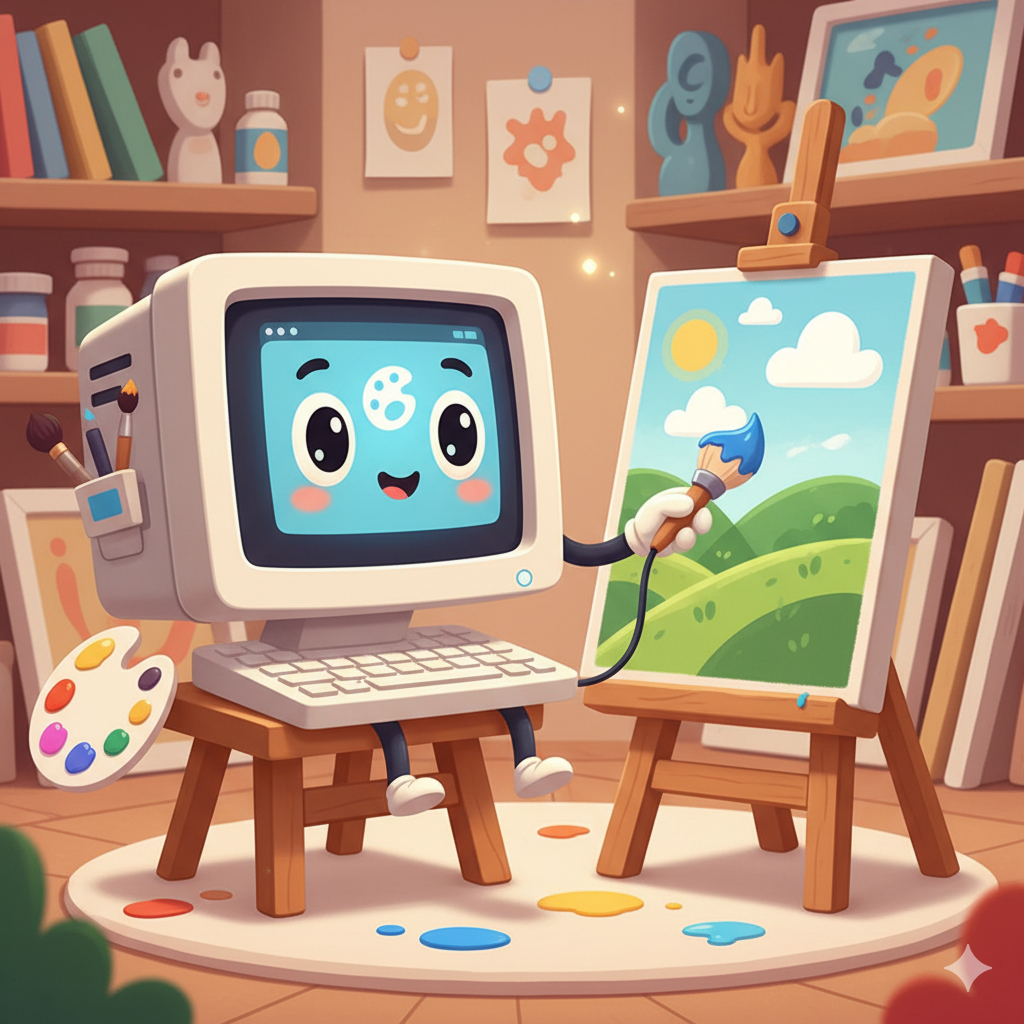
AI in Art: Tool, not Substitute
The debate around artificial intelligence in art often polarizes between uncritical enthusiasts and absolute detractors. Reality is more nuanced: AI is a tool, just like photography, the synthesizer, or editing software once were. The difference lies in how we use it.
A New Pencil
When photography appeared in the 19th century, many painters feared the end of their art. Instead, photography freed painting from the constraint of faithful representation, paving the way for impressionism and abstract art. AI could have a similar effect.
Artificial intelligence doesn’t create on its own. It responds to input, follows directions, processes according to parameters. The artist remains at the center of the creative process:
- Conceptualization: the idea originates in the human mind
- Direction: the artist guides, selects, refines
- Curation: choosing what works requires sensitivity
- Context: meaning emerges from human intention
Legitimate Use Cases
AI becomes a valid tool when:
Rapid exploration - Generating variations to explore creative directions. Not for the final result, but to stimulate ideas.
Overcoming blocks - When the blank page paralyzes, AI can offer a starting point to transform.
Prototyping - Testing visual concepts before investing hours in manual execution.
Collaboration - Using AI output as raw material to rework with traditional techniques.
The Artist’s Role Changes, It Doesn’t Disappear
Artists using AI must develop new skills:
- Communicating their vision with precision
- Recognizing when output works and when it doesn’t
- Integrating different tools into a coherent workflow
- Maintaining a distinctive voice despite technological mediation
These are artistic skills, not technical ones. They require taste, experience, sensitivity.
Transparency and Honesty
A fundamental aspect: transparency. Declaring the use of AI doesn’t diminish the work, it contextualizes it. Honesty about the process is part of artistic integrity.
Conclusion
Artificial intelligence is a powerful but neutral tool. In the hands of an artist, it becomes an extension of creativity. In the hands of those seeking shortcuts, it produces empty content. The difference lies not in the technology, but in the intention and competence of whoever uses it.
Art has always been transformed by its tools. AI is the next chapter in this evolution, not its end.